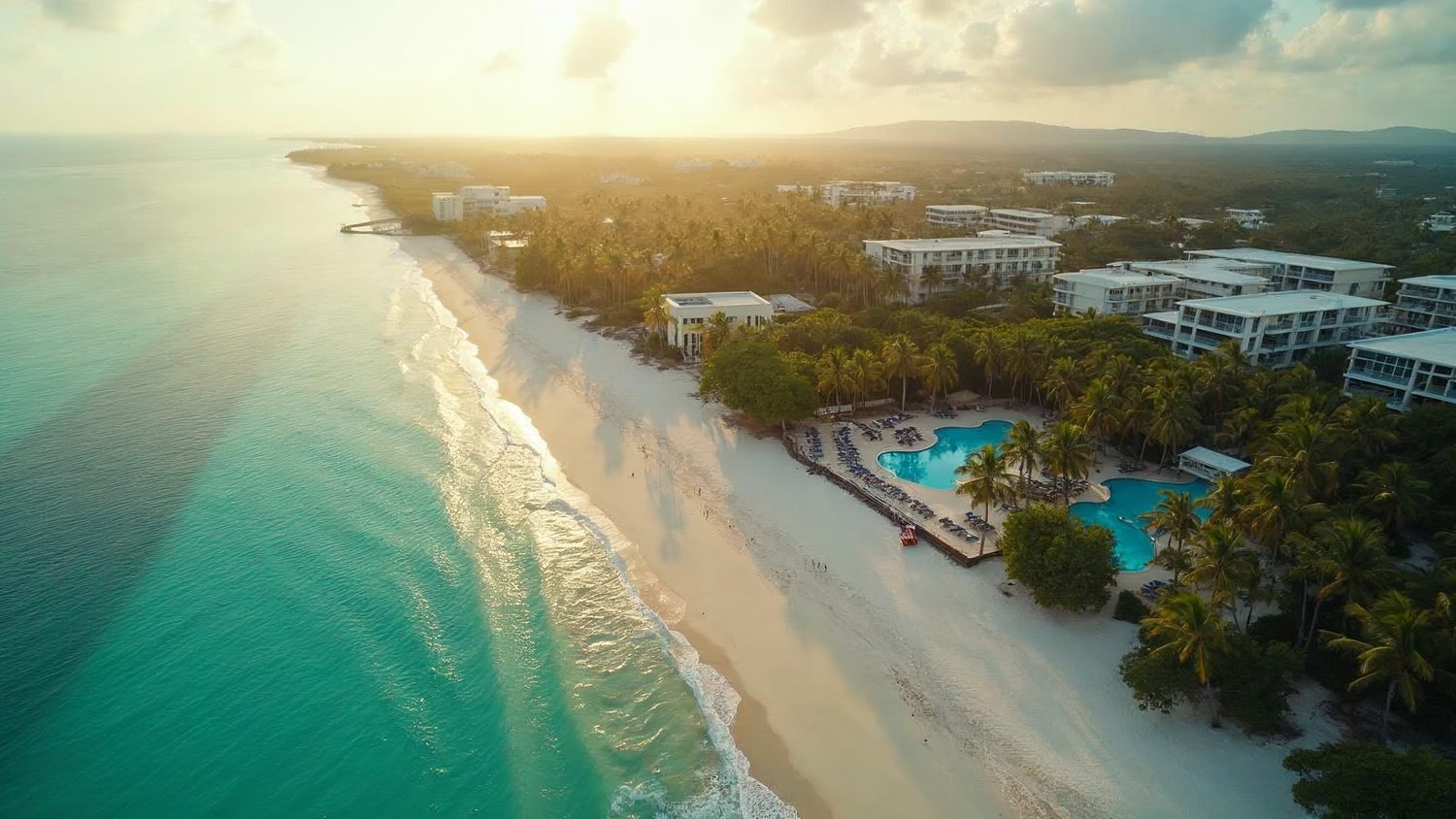
How to Read the Real Estate Market in the Dominican Republic in 2026 Without Buying Into Anyone's Sales Pitch: What Drives Prices, Which Areas Meet Which Types of Demand, and What to Check Before Entering the Market.
The real estate market in the Dominican Republic in 2026 is driven by three distinct factors that should not be conflated: tourism, which sustains demand for short-term rentals on the east and north coasts; local residential demand, concentrated in Santo Domingo and Santiago; and foreign investment, which primarily seeks new construction in tourist areas offering tax incentives. Each is influenced by different factors, so the same piece of news can be positive for one segment and neutral for another. For a buyer coming from outside the country, what matters is not the national average but three specific factors: where they are buying, under what legal structure, and with what time horizon. This article organizes these factors using verifiable sources, without making up projections.
What Drives the Real Estate Market in the Dominican Republic?
Tourism is the driving force behind the coast. The real estate market in the Dominican Republic is not driven by a single factor. Demand for vacation rentals in the eastern and northern parts of the country depends on the flow of international visitors and air connectivity. As the number of flights and seats to Punta Cana increases, so does the demand for lodging—and with it, the demand for short-term rental units.
The tax incentive attracts new construction. Law 158-01, known as the Confotur Law, exempts classified tourism projects from the ITBI and the real estate wealth tax for 15 years. This concentrates new supply in the areas where the incentive applies. We explain this in detail in the article on the Confotur Law.
Foreign buyers do not need to be residents. Dominican law does not restrict real estate purchases by foreigners or require prior residency, and that is one of the most significant factors when comparing the Dominican Republic to other Caribbean markets.
Local financing is expensive in pesos. As a result, a large portion of foreign purchases are made in cash or through the developer's payment plan, rather than with a local mortgage.
For macroeconomic figures (inflation, exchange rates, lending rates, foreign direct investment flows), the official source is the Central Bank of the Dominican Republic. It is best to consult the source directly rather than rely on third-party summaries.
Which areas are on the move, and why is there such demand?
| Area | Dominant demand | Traditional product | Buyer Profile |
|---|---|---|---|
| Punta Cana and Bávaro | Tourism, short-term rentals | Apartment in a new development with amenities | Foreign investor |
| Cap Cana | High-spending tourism | Apartments and Villas in the Master Plan | High-net-worth investor |
| Cabeza de Toro / Coral Golf | Tourism and Second Homes | Apartment in a golf resort | Market Entry |
| Downtown Punta Cana | Local Services and Businesses | Retail Space and Office | Long-term investor |
| Santo Domingo | Local residential area | City apartment | Dominican buyer |
| Santiago | Local residential area | Apartment and House | Dominican buyer |
The most costly mistake when analyzing real estate in the Dominican Republic is applying the logic of one segment to another. Buying on the east coast while expecting the residential market in Santo Domingo to behave the same way—or vice versa—leads to disappointments that are not the market’s fault but rather the result of misinterpretation.
How much is admission today?
The costs of entering the real estate market in the Dominican Republic today are shown in this table. These are the published entry-level prices from our own portfolio, verified on August 5, 2026:
| Product | Area | Price starting at |
|---|---|---|
| Commercial space | Downtown Punta Cana | US$104,040 |
| Apartment in a golf resort | Coral Golf Resort, Cabeza de Toro | US$154,900 |
| Offices and Business Premises | Cap Cana | US$171,600 |
| Residential apartment | Cap Cana | US$326,000 |
The key takeaway isn't the isolated figure: it's that the price range is determined by the location and type of development, not by square meters. The complete portfolio, including square meters and unit types, is available under "Projects."
How does the value change over time?
It’s important to be precise here, because this is where exaggerations are most common. The value of a property in a tourist area depends on specific, verifiable factors: the infrastructure being built in the surrounding area, the area’s zoning regulations, the pace of new supply, and trends in tourist demand. It does not depend on a fixed annual rate that anyone can guarantee.
We explain how this mechanism works and what factors truly drive it in the article on property appreciation in Punta Cana.
No reputable real estate agent guarantees an increase in property value. Anyone who makes such a guarantee in writing is selling something other than real estate.
What should you check before entering the market?
- Certificate of title and registration status for the property or the parent parcel of land for the project.
- Legal structure of the development: whether it operates under a trust in accordance with Law 189-11.
- Confotur status, verifiable in the official MITUR registry.
- A complete payment plan with dates and amounts, if it is a presale.
- Actual monthly maintenance, which in master developments may consist of two layers.
- Condominium Rules Regarding Short-Term Rentals.
- Developer track record: projects delivered and whether they were delivered on time.
- A written breakdown of all closing costs, including the 3% ITBI if there is no exemption.
What risks need to be assessed?
An honest look at the real estate market in the Dominican Republic includes what can go wrong:
- Focus on tourism. The east coast depends on the flow of visitors. It is both a strength and a vulnerability.
- Temporary oversupply. During periods of heavy construction, competition for rental units increases and puts downward pressure on rents.
- Risk of non-performance during the presale phase, which is covered by an escrow agreement and a contract—not by trust.
- Hurricane season and its impact on insurance and employment during certain months.
- Underestimated recurring costs: maintenance, insurance, taxes, and replacement of furniture.
None of these factors invalidates the investment. All of them can be managed if they are taken into account from the start.
Frequently Asked Questions
Can a foreigner buy real estate in the Dominican Republic without residency?
Yes. The law does not restrict the purchase of real estate by foreigners nor does it require prior residency. The process includes due diligence, a contract, payment of the ITBI tax when applicable, and registration of the title.
What is the Confotur Act, and why is it important in the market?
This is Law 158-01 on incentives for tourism development. It exempts eligible projects from the ITBI and real estate wealth tax for 15 years, which concentrates new construction in tourist areas. Each project is reviewed on a case-by-case basis.
Where can I find official data on the Dominican market?
The Central Bank publishes the country's macroeconomic statistics, including interest rates, exchange rates, and foreign direct investment. For the tax status of a tourism project, refer to the MITUR registry.
Is Santo Domingo or the tourist area a better choice?
These are markets with different dynamics. Santo Domingo caters to local residential demand and long-term rentals; the east coast caters to tourist demand and short-term rentals. The choice depends on your goal and time horizon, not on which one is “better.”
Can I finance the purchase through a Dominican bank?
Yes, several financial institutions offer mortgages, even to nonresidents, although under different terms than those for residents. A significant portion of foreign purchases of new-construction properties is made through the developer’s payment plan.
At Garrigó Real Estate, we give you the big picture using verifiable sources, and we also tell you what’s not a good fit—not just what we sell.
Let's talk about your next investment · Message me on WhatsApp