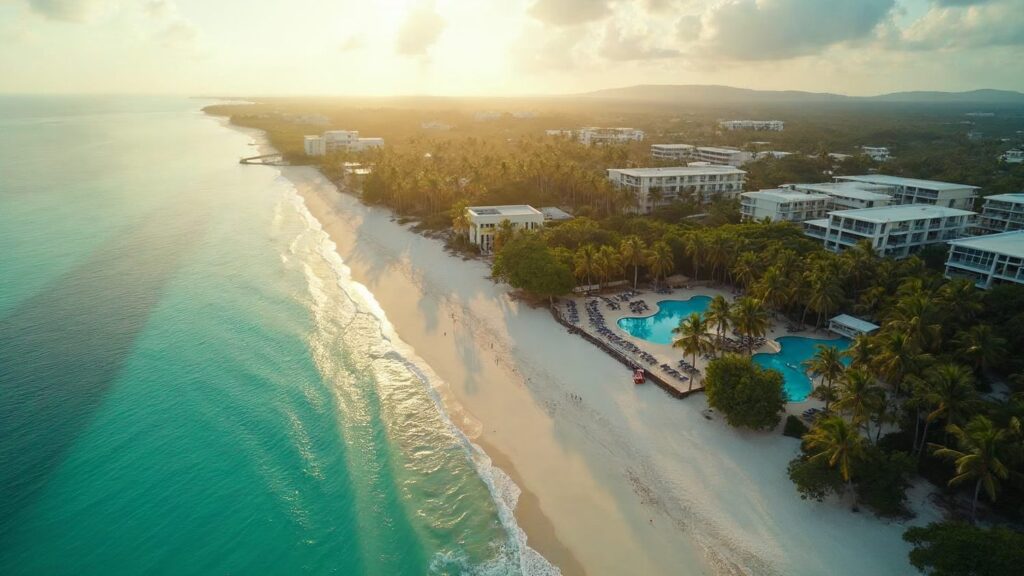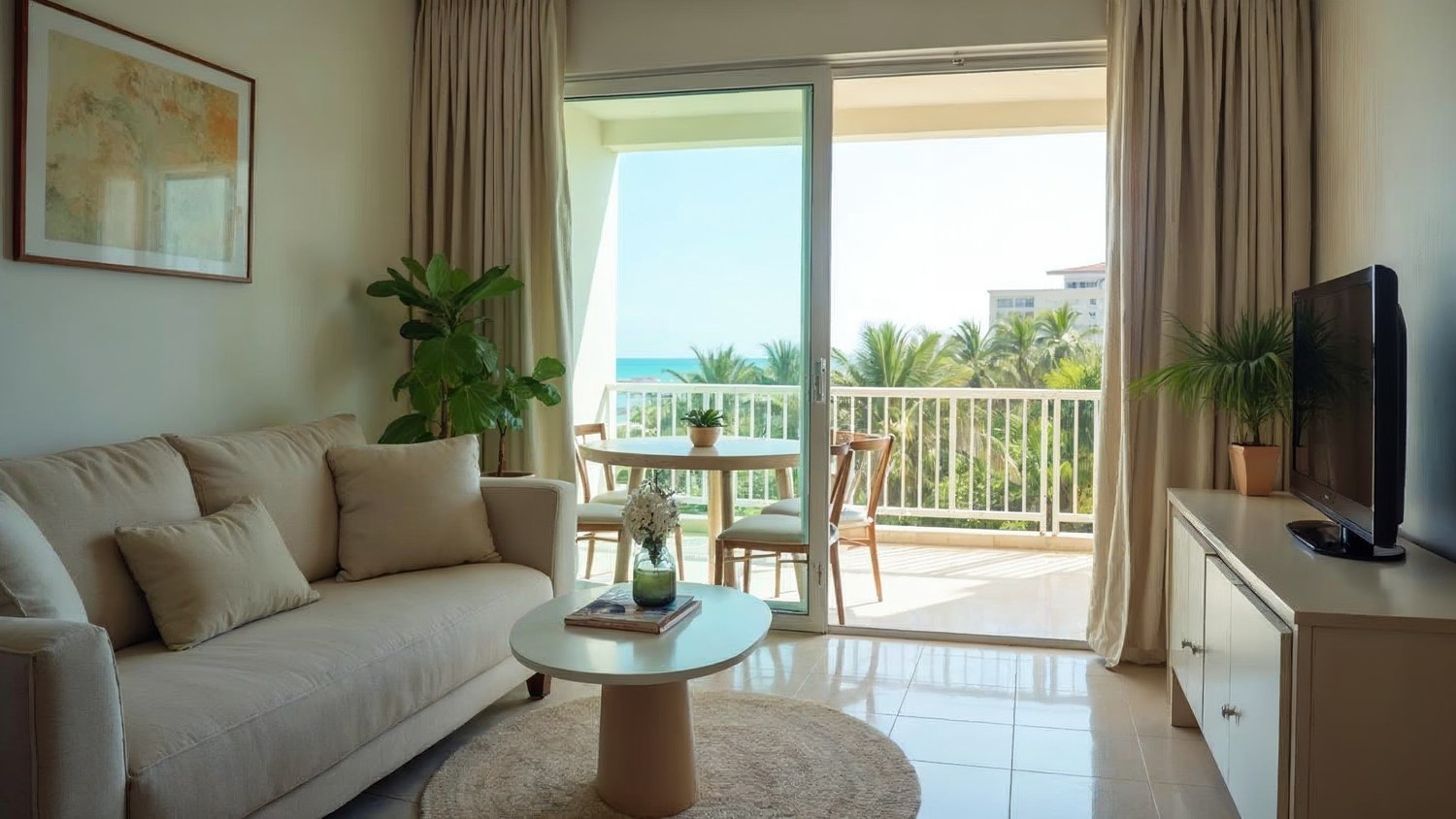
Almost all the talk about renting revolves around Airbnb, and for some property owners, long-term rentals in Punta Cana are the best option.
Long-term rentals in Punta Cana exist because the area is no longer just a tourist destination: there is a resident population that works in hospitality, healthcare, education, construction, and services, and that needs stable housing. For the owner, this market offers the opposite of vacation rentals: lower but more predictable income, with much less work. There’s no weekly turnover, no cleaning between stays, and no off-season that leaves the calendar empty. In exchange, the income ceiling is lower, and you lose the ability to use the property whenever you want.
Short-term or long-term rental in Punta Cana?
| Factor | Short-term rental | Long-term rental |
|---|---|---|
| Potential income | Higher during peak season | Lower, but stable throughout the year |
| Seasonality | Strong | Virtually none |
| Operating Costs | Cleaning, Management, Restocking | Minimum requirements among tenants |
| Wear and tear on the unit | High, by rotation | Smaller, but continuous |
| Personal use | Possible out of stock | No, for the duration of the contract |
| Furniture | Essential | Optional, depending on the tenant |
The right model depends on three things: whether you live in the country, whether you want to use the property, and how much management you’re willing to take on. The entire mechanics of vacation rentals lie in how managed vacation rentals work, and the way to compare the numbers for each model is by calculating the actual return on investment.
Who rents long-term in this area?
Typical profile: hospitality and service industry professionals, medical and teaching staff, construction workers, and, increasingly, foreigners who are checking out the area before buying a home.
That last group is of interest to a landlord because they typically look for a furnished unit of a higher standard, and they are the highest-paying tenants in the residential market.
What does a resident tenant ask for that a guest doesn't?
Things that are unglamorous but very important:
- Stable power. A power generator that provides power to the apartment, not just the common areas.
- Reliable water supply and water pressure, with the condominium's own water tank.
- Real Internet, because many people work from home.
- Assigned parking, because people in this area rely on their cars.
- Storage—something a tourist doesn't need, but a resident does.
- Close to schools and a supermarket, but not to the beach.
That last line sums up the difference. A property that’s perfect for Airbnb might be mediocre for residential rentals—and vice versa.
Does the condominium allow it?
Almost always, yes: regulations typically restrict short-term rentals, not long-term stays. In fact, in condominiums that prohibit Airbnb, long-term rentals in Punta Cana are the only remaining rental option—and it’s important to know this before you buy, not after.
Even so, you should read the rules, because some condominiums set a minimum stay, limit the number of occupants, or require tenants to register with the property management.
What should you look for in the contract?
- Term and renewal, with the conditions for rent adjustments set forth in writing.
- Deposit and when it is refunded.
- Who pays for what: maintenance fees, electricity, water, internet, and gas.
- A signed inventory, including dated photos, if the property is delivered furnished.
- Repairs: Which Ones Are the Landlord's Responsibility and Which Ones Are the Tenant's?
- Grounds for termination and notice periods.
Point three is the one that causes the most conflict. In this area, it is customary for the owner to pay the maintenance fee and the tenant to pay for utilities, but this must be put in writing—it cannot be left to implication.
What about taxes?
Rental income generated in the country is considered income from a Dominican source and is taxable in the Dominican Republic, regardless of where the owner lives. The tax treatment depends on whether the property is held in the name of an individual or a corporation. The obligations and deadlines are published by the DGII, and it is advisable to work out the structure with a tax advisor before signing the first lease agreement.
Who handles it if you don't live in the country?
Although long-term rentals in Punta Cana involve much less work than short-term rentals, they still require someone local to show the unit, sign the lease, collect rent, handle any repairs, and manage tenant turnover.
The available options and how their fees are structured can be found under " Property Management in Punta Cana."
Frequently Asked Questions
Which is more profitable: long-term rentals or Airbnb?
In gross terms, short-term rentals tend to yield higher returns during peak season. In net terms and over a full year, the difference narrows significantly, because short-term rentals incur fees, cleaning costs, restocking expenses, and slow months. The methodology for comparing them is based on how much an Airbnb in Punta Cana yields.
Is it a good idea to rent a furnished apartment?
For foreign tenants or those staying for a medium-term period, yes, and it allows landlords to charge a higher rent. Long-term local residents, however, often prefer to bring their own furniture.
How long does a typical contract last?
The standard term is one year, renewable. It is advisable to set forth the adjustment mechanism in writing from the outset.
Can I use the property during the term of the contract?
No. That is one of the fundamental differences compared to short-term rental income.
Does the tenant pay the maintenance fee?
It is usually paid by the owner, but this is negotiable and must be specified in the contract.
Let's see which model is right for you
If you own a property in the area or are planning to buy one and want to decide between short-term and long-term rentals in Punta Cana based on concrete figures, please contact us. You can view our portfolio under “Projects” or reach out to us via the “Contact” page.